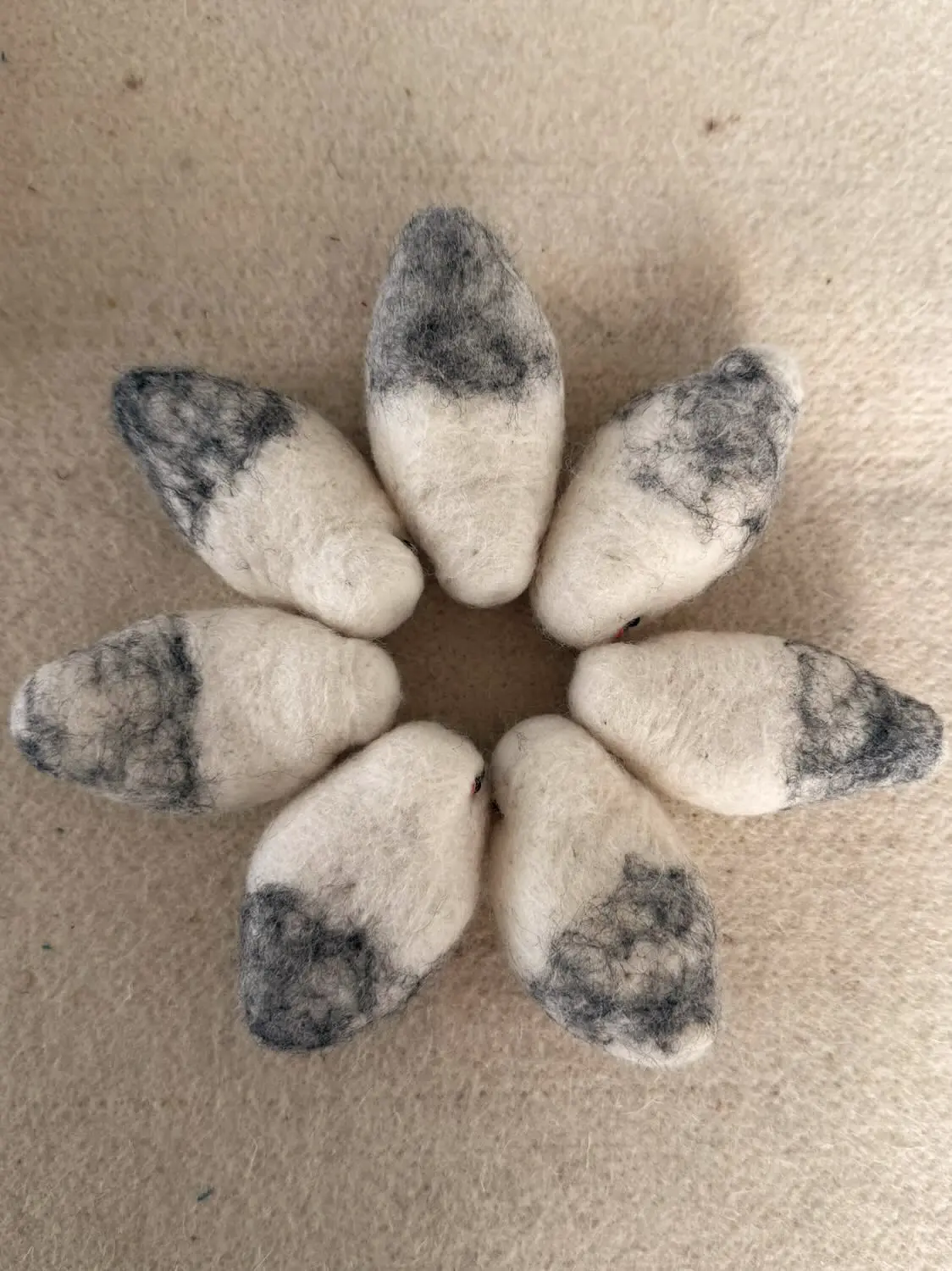
Why no two AWEBOs are alike
Put two wool AWEBOs together and you can see it: the same ptarmigan, made by the same hands, but not an identical copy.
Made, not manufactured
An AWEBO starts with loose wool. Its form is shaped and felted by hand; its details are stitched individually. That means its outline is decided as the fibres are worked, not stamped from a mould. The small choices in where a curve sits or how the head turns remain visible in the finished bird.
The grey markings use undyed Norwegian wool. Even with the same materials and the willow ptarmigan as the reference, the placement of those markings and the stitched lines can differ. One bird may look alert, another calm; a slight lean changes the way it sits or hangs. Those differences are part of handwork, not claims that one bird is a different species.
We do not aim to remove every small variation to make the birds look factory-identical. We do still look over each finished piece before it is packed. Individuality is not a substitute for checking the wool, details and attachment.