Order for ChristmasGift guide

How an AWEBO is made

An AWEBO starts as loose wool and ends as a small ptarmigan with its own number. Here is what happens between the workbench and the box.

1. Wool

The AWEBO begins with loose wool, not a pre-formed body. Its grey markings come from undyed Norwegian wool. The colours recall the changing plumage of the willow ptarmigan that inspired AWEBO, rather than a printed pattern applied at the end.

In the workshop photo, the unfinished birds sit together on the table. Their outlines and markings can already be compared before any clips or tags are attached.
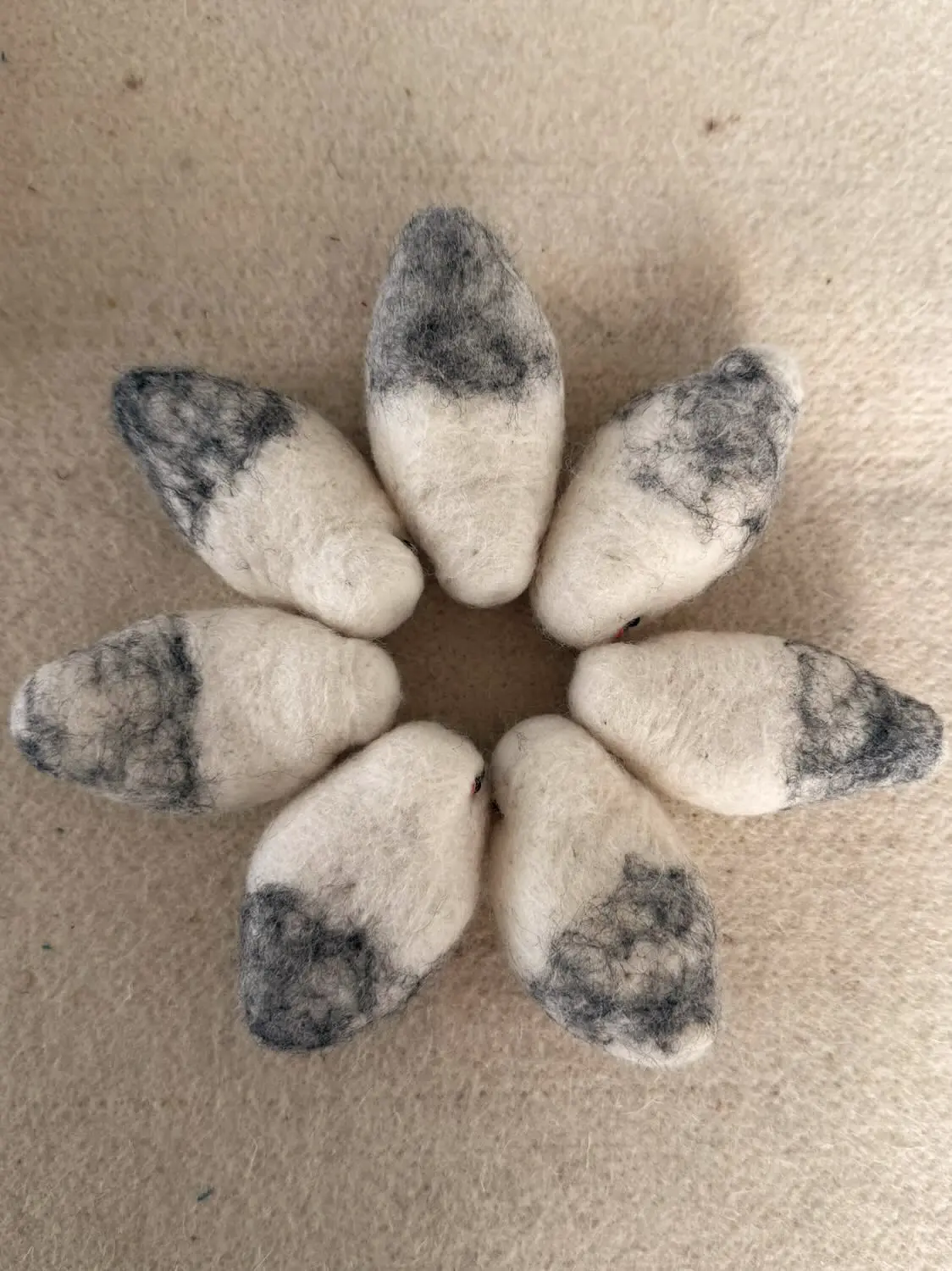
Seven unfinished wool birds arranged in a circle on the workshop table.

How an AWEBO is made

From loose wool to one individually numbered bird. Every step happens by hand, in Norway, and no step is rushed.

1. Wool

Every bird begins with wool. The colours are chosen for the bird it will become — the browns and whites of a willow ptarmigan through the seasons.

2. Shaping

The body takes form by hand. The posture — alert, calm, a slight lean — emerges here and is never corrected away.

3. Felting

The wool is felted until the bird holds its shape — dense enough to last, soft enough to still feel like wool.

4. Stitching

Details are added individually — the markings and the small decisions that make each bird itself.

5. Numbering

Each finished bird receives its own individual number. Numbers are never reused, and each edition is small.

6. Final inspection

The bird is looked over one last time — by the same hands that made it, not a production line.

7. Packaging

It is packed for its journey with a birch-bark name tag, photographed, and sent to the person whose number it carries.

Explore the AWEBO · Why no two AWEBOs are alike · Back to the Journal